Is Elon Musk Building an AI Phone? What the Latest SpaceX Device Rumors Could Mean
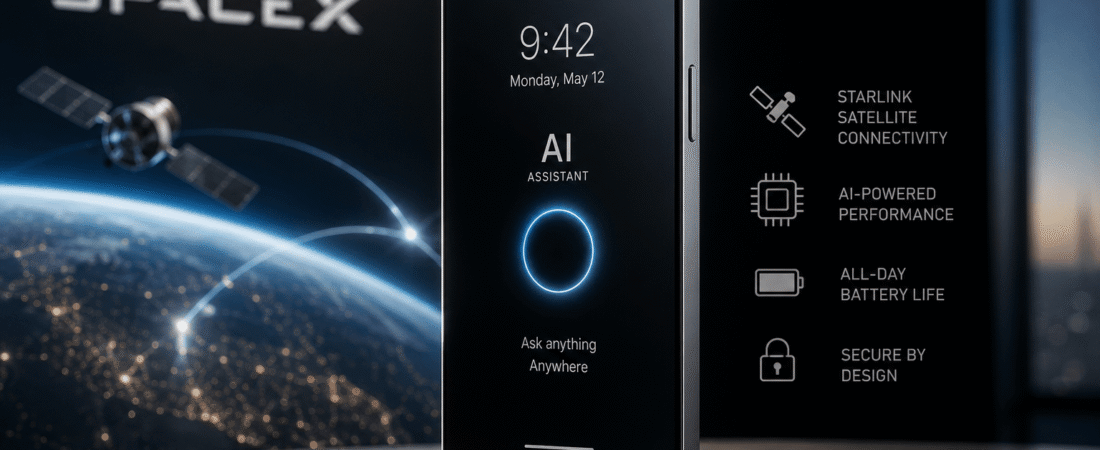
The technology world is once again buzzing with speculation surrounding Elon Musk. Recent reports claim that SpaceX has privately shown investors an early prototype of a slim, touchscreen AI device, sparking fresh debate about whether Musk is preparing to challenge Apple’s iPhone. While Musk has repeatedly dismissed rumors of building a traditional smartphone, the timing of these reports has reignited curiosity across the tech industry.
Unlike previous speculation, these rumors focus less on a conventional phone and more on an AI-first personal device. If even part of the reports prove accurate, the implications could extend far beyond another smartphone launch.
What We Know So Far
According to recent reports and industry speculation, the rumored device is believed to have several notable characteristics:
- A slim, minimalist design that is reportedly thinner than many current smartphones.
- A full touchscreen interface designed around AI interactions rather than traditional mobile apps.
- Still in an early prototype stage with no official product announcement.
- Expected to leverage SpaceX’s engineering capabilities together with Tesla’s expertise in AI chips and hardware integration.
- Potential compatibility with Starlink’s satellite communication network, although this has not been officially confirmed.
At this stage, none of these specifications have been verified by SpaceX, and the company has not announced plans to release such a product.
Why Previous AI Devices Struggled
Several AI-focused devices have entered the market over the past few years, yet none have achieved mainstream success.
Products like the Rabbit R1 attracted attention with ambitious promises but struggled because they depended heavily on cloud services while offering limited everyday convenience. Humane’s AI Pin generated excitement before launch, but many reviewers criticized its battery life, response speed, and practical usability.
The biggest challenge facing AI hardware has never been artificial intelligence itself. Instead, users have questioned whether carrying another device actually solves a problem that smartphones cannot already handle.
Consumers expect new hardware to provide a clear advantage over the devices they already own. Without that advantage, even innovative technology can struggle to gain widespread adoption.
Why SpaceX Could Be Different
If SpaceX is indeed exploring AI hardware, it may possess one significant advantage that previous startups lacked: infrastructure.
Unlike smaller AI hardware companies, SpaceX already operates one of the world’s largest satellite internet networks through Starlink. Combining an AI device with global satellite connectivity could reduce dependence on traditional mobile networks and potentially create new use cases in remote locations where conventional smartphones have limited coverage.
Tesla’s experience designing custom AI chips and high-performance computing systems could also provide advantages in power efficiency and on-device intelligence.
Of course, these possibilities remain speculative until the company officially confirms its plans. However, SpaceX is one of the few organizations with the engineering resources to build both the hardware and the supporting communications network.
The Bigger Question
Whether this rumored device ever reaches consumers is almost secondary to the larger trend. Major technology companies are increasingly searching for what comes after today’s smartphone.
The next generation of personal computing may not be defined by bigger screens or faster processors, but by hardware designed specifically for AI-powered interactions.
If SpaceX enters this market, competition could shift from smartphones alone to entirely new categories of intelligent personal devices.
Final Thoughts
For now, the reported SpaceX AI device remains an unconfirmed rumor rather than an announced product. Still, the discussion highlights how quickly the AI hardware landscape is evolving. Whether or not Elon Musk eventually introduces an AI-focused device, the race to define the next generation of personal technology is clearly underway.